
From Ideas to Engineering Impact
RoboNest Startup Incubator
Selected teams from the TeenX Engineering Challenge become RoboNest Fellows and join a semester-long incubation programme with faculty mentoring, technical workshops, and hardware support to turn their concept into a working prototype.
What incubation includes
Structured Support, Not a Solo Project
- Faculty mentoring alongside student mentors
- Technical workshops covering relevant engineering skills
- Prototype planning and design reviews
- Project-specific hardware support
- Project documentation and user validation
- Presentation coaching ahead of the Showcase
- Engagement with global mentors
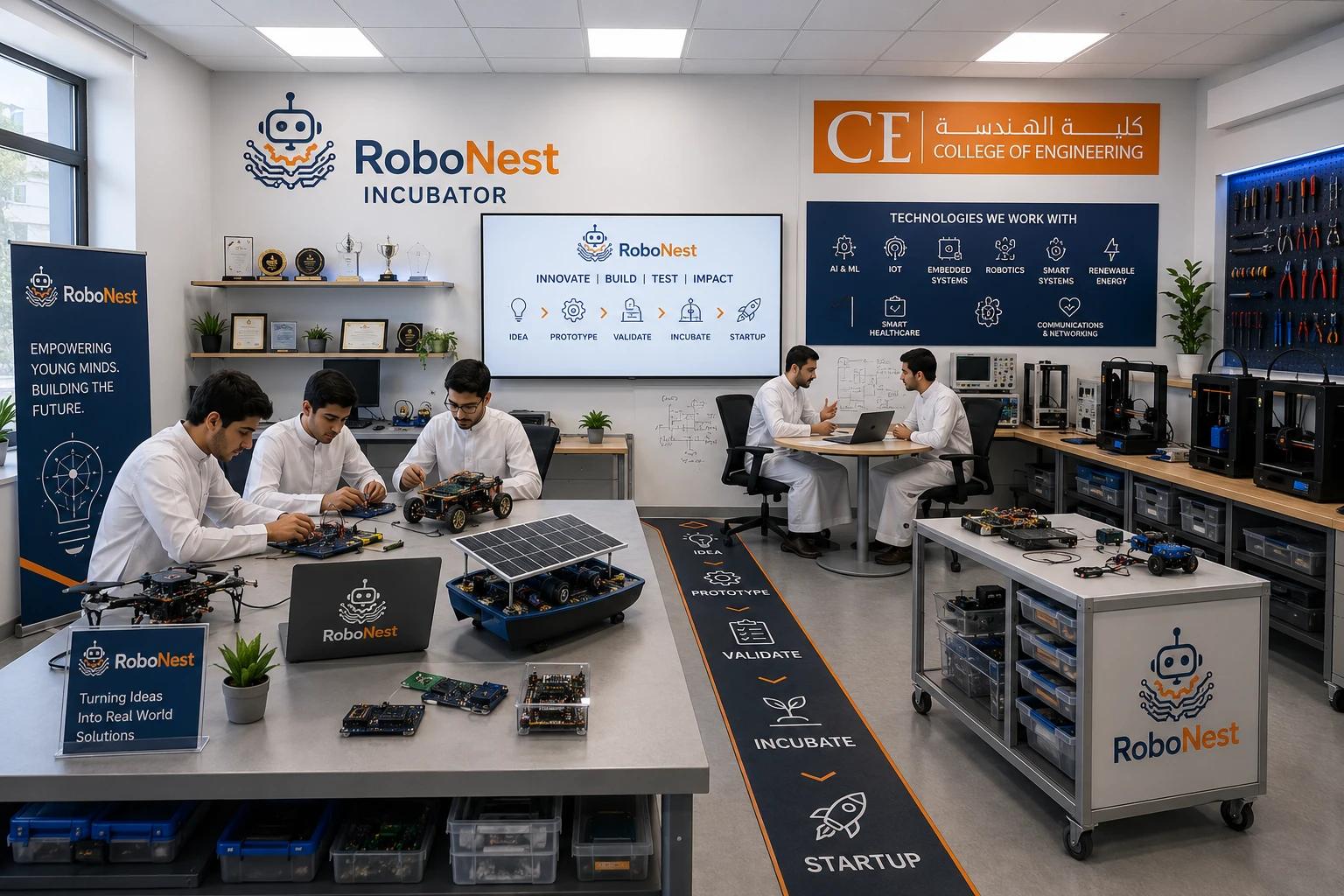
RoboNest supports incubation projects with mentoring, guidance and project-specific hardware where appropriate. It does not guarantee unlimited funding, hardware, or facilities access for every project support is scoped to each project's needs.
The incubation pathway
Understand → Design → Build → Test → Improve → Showcase
Understand
Fellows define the problem clearly, research context, and validate that it's worth solving.
Design
Concepts are developed into testable engineering designs with faculty and mentor input.
Build
Teams construct working prototypes with technical and hardware support.
Test
Prototypes are evaluated against real-world conditions and requirements.
Improve
Findings from testing are fed back into iterative design refinement.
Showcase
Finished projects are presented at the RoboNest Engineering Showcase.
RoboNest Fellows
What's Expected of a Fellow
Fellows commit to the full incubation cycle: attending scheduled mentoring and workshop sessions, documenting their design process, meeting milestone reviews, and presenting their finished prototype at the RoboNest Engineering Showcase.